Ammonite Spiral Embroidery Design Review
When I first opened the Ammonite Spiral Embroidery Design, my immediate reaction was a sense of calm curiosity. There is something undeniably soothing about the geometry of a spiral, especially one that mimics the ancient, fossilized beauty of an ammonite. As a designer who spends hours tweaking stitch density and evaluating how thread interacts with fabric, I rarely find a motif that balances mathematical precision with organic flow so effortlessly. This isn't just another generic pattern; it feels like a piece of history waiting to be stitched onto your next handmade product.
I decided to put this digital embroidery file through its paces before recommending it for any commercial venture. My goal was to see if the design could hold up in real-world scenarios, from high-volume custom apparel to delicate personalized gifts. The concept is simple yet powerful: a prehistoric shell form rendered in modern stitching techniques. It offers a unique aesthetic that stands out against the sea of floral and geometric designs flooding the market today.
First Impressions: Mood and Visual Personality
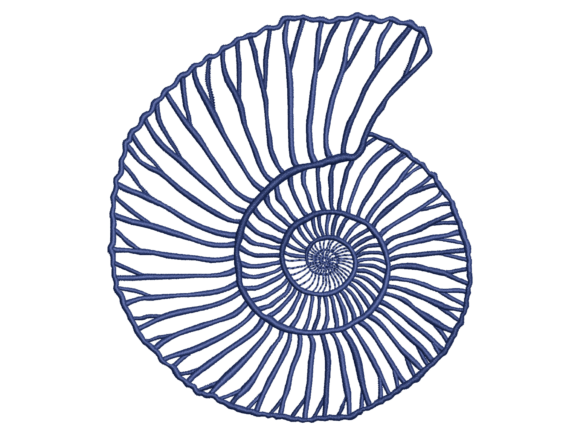
The mood created by the Ammonite Spiral Embroidery Design is one of timeless elegance mixed with natural science. It evokes a feeling of exploration and depth. Visually, the layout relies heavily on concentric curves that draw the eye inward, creating a focal point that is impossible to ignore. This makes it an excellent choice for projects where you want the viewer to pause and appreciate the craftsmanship.
In terms of detail level, the design strikes a balance that is crucial for successful machine embroidery. It is not so sparse that it looks unfinished, nor is it so dense that it risks puckering or losing definition. The lines suggest a satin stitch finish that would provide a smooth, glossy sheen, while the internal structure likely utilizes fill stitches to add texture without overwhelming the fabric. This kind of thoughtful construction is exactly what separates a hobbyist project from a professional-grade finished product.
Real-World Application: From Tote Bags to Boutique Branding
To truly understand the potential of this design, I imagined it in several different contexts. The first scenario that came to mind was a custom embroidered tote bag for a boutique owner. Imagine a sturdy canvas tote in a deep navy blue, featuring the Ammonite Spiral Embroidery Design in cream or metallic gold thread. The contrast would be striking, and the spiral shape would wrap beautifully around the curve of the bag handle attachment. It transforms a simple utility item into a statement piece that customers would be proud to carry.
Next, I considered the world of baby products. A soft cotton onesie or a receiving blanket adorned with this design could be a hit for parents who appreciate unique, non-traditional themes. The spiral has a gentle, womb-like quality that fits perfectly with nursery decor or baby shower gifts. Unlike more aggressive graphics, this design feels protective and nurturing, making it ideal for items that need to convey warmth and care.
For small business owners looking to expand their Etsy listings, this design offers versatility. It works exceptionally well as an embroidered patch for denim jackets or backpacks. The clean lines of the ammonite shape ensure that even when cut out and appliqued, the edges remain crisp. Furthermore, for those selling digital assets, this design serves as a fantastic printable mockup element. You can visualize how it looks on various fabrics, helping potential buyers understand the final look before they purchase the physical item.
Technical Performance and Stitch Clarity
When evaluating how the Ammonite Spiral Embroidery Design performs during the actual stitching process, the key factors are stitch density and hoop size compatibility. Spirals naturally require careful attention to tension, especially as the curves tighten toward the center. If the stitch density is too high in the inner loops, the fabric may pucker, ruining the smooth flow of the spiral. However, based on the clean lines of the digital preview, the file appears optimized to maintain clarity across different scales.
The design also shines in its ability to adapt to different thread colors. Whether you choose a monochromatic scheme using varying shades of gray or opt for a vibrant palette of ocean blues and teals, the underlying structure remains strong. This flexibility is vital for commercial embroidery projects where clients often have specific brand color requirements. The design does not rely on complex shading to make an impact; instead, it uses form and line to create visual interest, which is a hallmark of durable, long-lasting embroidery.
Where Caution is Required
While this design is versatile, there are specific situations where it requires careful consideration. Using the Ammonite Spiral Embroidery Design on very small hoop sizes can be risky. If the design is scaled down too much, the intricate details of the spiral might get lost, resulting in a blob rather than a distinct shape. Similarly, textured fabrics like heavy waffle knits or loose weaves can obscure the fine lines of the embroidery, making the design appear muddy.
Stretchy fabrics present another challenge. While the spiral shape is relatively forgiving compared to straight lines, excessive stretching during the hooping process can distort the curves. It is essential to use the proper stabilizer to counteract the fabric's natural movement. Additionally, applying this design to curved surfaces like caps requires precise digitizing adjustments to ensure the spiral sits flat and doesn't twist unnaturally.
Dense stitch areas within the center of the spiral can also become problematic if the wrong needle or thread type is used. For best results, always test the design on scrap fabric first. This step allows you to check thread color contrast and inspect small details under magnification. If the design is intended for frequent washing, such as on kitchen towels or aprons, ensuring the stitch density is sufficient to prevent fraying is critical for maintaining the integrity of the finished product.
Practical Designer Notes for Success
Before integrating this embroidery file into your production workflow, there are several practical steps to take. First, confirm the licensing terms. Are you allowed to sell finished items made with this design? Does the license cover digital resale? These questions are paramount for Etsy sellers and craft business owners to avoid legal issues.
Secondly, pay close attention to the stitch density. Review the file to see how the fill stitches are arranged. If the density seems too high for the fabric you plan to use, consider adjusting the settings in your embroidery software. Always test the design in black and white mockups to ensure the contrast holds up before committing to expensive materials. Comparing light and dark fabric backgrounds will help you determine the best thread colors to maximize visibility.
Finally, remember that the success of any handmade product lies in the details. Proper stabilization, correct needle selection, and consistent thread quality are non-negotiable. When executed correctly, the Ammonite Spiral Embroidery Design elevates a simple item into a work of art. It adds a layer of sophistication and uniqueness that customers recognize and value.
Whether you are creating a holiday gift, a boutique branding asset, or a personalized gift for a loved one, this design offers a compelling visual narrative. It bridges the gap between ancient natural forms and modern crafting techniques. By understanding its strengths and limitations, you can confidently incorporate this design into your portfolio, knowing it will deliver a professional, polished result every time.